You do not need a true waterfront address to enjoy Madison’s shoreline lifestyle. If you love the idea of beach days, coastal walks, and a village-centered town feel, but not the price tag that often comes with direct frontage, Madison gives you more than one way in. The key is knowing where shoreline access, neighborhood character, and price start to separate. Let’s dive in.
Why Madison appeals to shoreline buyers
Madison offers more than a single beach strip. The town’s shoreline identity is shaped by Surf Club, East Wharf, West Wharf, and Hammonasset Beach State Park, along with a downtown center on Route 1 between Wall Street and Route 79.
That mix matters when you are home shopping. You can look for a home that feels connected to the water and still stay focused on access, walkability in pockets, and day-to-day enjoyment instead of paying strictly for frontage.
The town’s beaches are an important part of that lifestyle equation. According to the town’s 2026 beach-pass information, residents and taxpayers can buy seasonal beach parking passes, and passes are required to park at all beaches beginning May 23, 2026.
What water-adjacent living means in Madison
In Madison, water-adjacent usually means you are close to the shoreline experience without owning direct waterfront land. That can look like walk-to-water access, beach rights, an interior lot on a shoreline road, or a buffered home just off the most expensive stretch.
For many buyers, this is the sweet spot. You still get the feel of a coastal town, easier access to beaches and shoreline recreation, and often a lower maintenance or lower acquisition cost than a true waterfront property.
It is also important to keep expectations grounded. Madison is not inexpensive overall, and water-adjacent living here is not a bargain in absolute terms. It is simply a more attainable way to enjoy the shoreline than buying a direct waterfront home.
East Wharf offers classic shoreline character
East Wharf feels close to the action
East Wharf is one of the clearest examples of getting the shoreline feel without paying full waterfront pricing. Current property examples show small lots by suburban standards, around 0.10 to 0.22 acre on homes such as 91 E Wharf Rd and 110 E Wharf Rd.
That smaller-lot pattern helps explain the area’s appeal. You are near the water and near one of Madison’s best-known shoreline pockets, but many homes are not direct waterfront estates.
Housing stock skews older and coastal
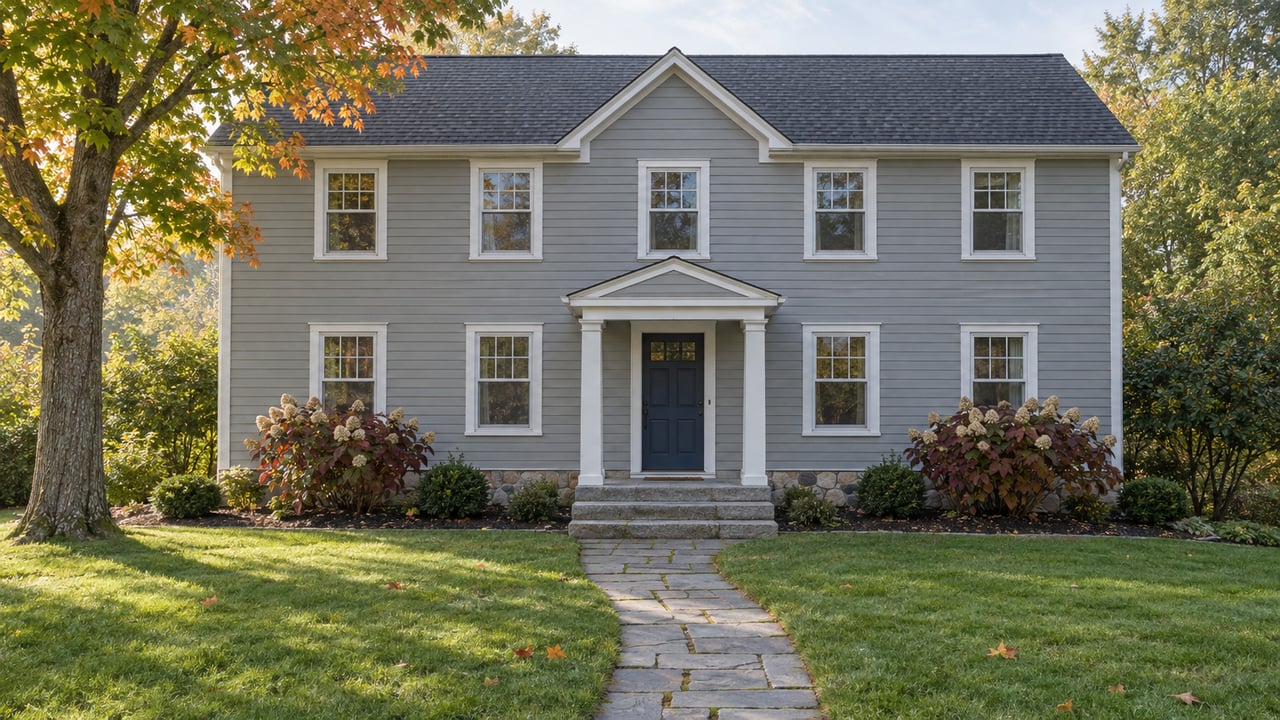
The homes in this area tend to lean older, with colonials and colonial/Victorian styles showing up in current listings. For buyers who like established shoreline neighborhoods with a traditional New England feel, that can be part of the draw.
You may trade lot size for location here. If your priority is being close to the water rather than having a large yard, East Wharf can be worth a close look.
Island Avenue offers more buffer
Island Avenue often gives buyers a little more breathing room. Current examples include 56 Island Ave at 0.88 acre and 44 Island Ave at 1.17 acres, which is a noticeable jump from the tighter East Wharf lot pattern.
The styles also vary, from contemporary to colonial. If you want shoreline access and atmosphere but prefer a more buffered setting, Island Avenue may feel like a better fit.
Surf Club and West Wharf balance access and space
A practical middle ground
The Surf Club and West Wharf area often feels like a balanced compromise. You are still in Madison’s shoreline cluster, but the lot sizes and overall setting can feel a bit roomier than East Wharf.
Current examples support that impression. One Surf Club property is a 1965 colonial with 2,520 square feet on 0.51 acre and walk-to-water access, while another nearby home offers 4 bedrooms, 2.5 baths, 2,160 square feet on 0.47 acre.
Why buyers like this pocket
For many buyers, this area checks several boxes at once. You can stay close to beach amenities, keep some usable yard space, and still avoid the much steeper pricing of direct waterfront ownership.
That makes Surf Club and West Wharf especially appealing if you want shoreline lifestyle with a little more flexibility in the property itself. It often feels less like a pure compromise and more like a smart trade-off.
Middle Beach shows the price gap clearly
Same road, very different pricing
If you want to understand Madison’s waterfront premium, Middle Beach Road and Middle Beach Road West make the difference easy to see. On these streets, lot position and frontage can create a very large spread in value.
Current examples show smaller, older, non-waterfront or interior-lot homes around the low- to mid-$1 million range. For example, 97C Middle Beach Rd is an interior-lot 2-bedroom home on 5,227 square feet with an estimate around $1.09 million, while 15 Middle Beach Rd is a 3-bedroom colonial on 4,792 square feet with an estimate around $1.57 million.
Waterfront pushes prices much higher
Direct-waterfront homes on the same road jump sharply. Current examples such as 41 Middle Beach Rd W, 92 Middle Beach Rd, and 114 Middle Beach Rd show estimated values around $3.68 million to $4.21 million.
That gap helps define the opportunity for buyers. If your goal is the shoreline setting rather than private frontage, a non-waterfront home on or near these roads may deliver much of the experience at a meaningfully lower price point.
Hammonasset and Boston Post Road favor lower maintenance
Condos can open the door
If you care more about access than owning a waterfront house, the Hammonasset and Boston Post Road condo corridor stands out. In the current data, this is the most budget-conscious path to Madison’s shoreline lifestyle.
A new-construction condo at 1339 Boston Post Rd Unit 3-2 is a 1,230-square-foot, 2-bedroom, 2-bath unit with beach rights. Nearby units in the same complex show estimates ranging roughly from the low $600,000s to the low $900,000s.
Why this option works
This is a very different value proposition from a single-family shoreline property. For some buyers, that is exactly the point.
A condo can offer lower-maintenance living, easier lock-and-leave ownership, and shoreline access without the cost and upkeep of direct waterfront ownership. If you are shopping for a second home or a simpler coastal setup, this corridor deserves attention.
Madison is walkable in pockets, not everywhere
Madison’s shoreline appeal is real, but it helps to be practical about mobility. Walk Score rates the town at 6 out of 100 and Bike Score at 25 out of 100, which reflects a car-dependent town overall with limited bike infrastructure.
That said, the better way to think about Madison is by pockets. It is not an urban walk-everywhere environment, but it does have concentrated areas where walking and biking feel more enjoyable, especially near the coast and around downtown.
The town has also been working to improve that experience. Madison’s Bicycle and Pedestrian Advisory Committee, created in 2018, has supported safety studies for shore roads, Route 1, and downtown, along with a Complete Streets policy.
Recreation helps deliver the shoreline lifestyle
For many buyers, daily lifestyle matters more than strict walkability scores. Hammonasset Beach State Park adds major recreational value with its two-mile sandy beach, coastal setting, and trail network.
The park includes a 3.4-mile paved multi-use trail, the Meigs Point Trail, and a connector to the Shoreline Greenway Trail. If you picture your shoreline life as beach mornings, bike rides, and casual outdoor time, that recreational access can be a big part of the draw.
Madison Center adds value beyond the beach
One reason Madison stands out is that it is not just a beach market. Its downtown center along Route 1 between Wall Street and Route 79 adds another layer to the town’s appeal.
The town’s streetscape project focuses on sidewalks, lighting, curbing, and trees. That supports the idea of Madison as a shoreline town with a village core, which can make water-adjacent living feel fuller and more flexible than a beach-only location.
For buyers, that means your lifestyle is not limited to summer beach access. You are also buying into a town that has a recognizable center and a broader sense of place.
What price expectations should look like
Madison’s broader market already sits at a higher price point than many Connecticut towns. Zillow reports an average home value of $702,124 and a median list price of $714,667 as of March 31, 2026, while Realtor.com shows a median listing price of $709,000 and median days on market of 31.
Against that backdrop, shoreline-adjacent homes are not cheap. The practical takeaway is that they are generally less expensive than true waterfront, not inexpensive on their own.
A useful rule of thumb from current examples is this: water-adjacent homes without direct frontage often cluster in the low- to mid-$1 million range, while direct waterfront on the same shoreline streets can be several million dollars higher. In most cases, the spread comes from frontage, views, access, and lot position.
How to shop smart for water-adjacent value
If you are trying to capture Madison’s coastal lifestyle without paying waterfront pricing, focus on the features that matter most to you.
Ask yourself whether your top priority is:
- Walk-to-water convenience
- Beach rights or beach access
- More yard space
- Lower-maintenance living
- A second-home setup
- Proximity to downtown and shoreline recreation
When your priorities are clear, the right area often becomes clearer too. East Wharf may suit buyers who want classic shoreline character, Surf Club or West Wharf may feel more balanced, Middle Beach may offer strategic alternatives to direct frontage, and the Hammonasset condo corridor may provide the simplest point of entry.
If you want help comparing these options in a practical, street-by-street way, Jennifer Gurnell offers the kind of local shoreline guidance that can help you narrow in on the right fit with confidence.
FAQs
What does water-adjacent living in Madison mean?
- In Madison, water-adjacent living usually means you are near the shoreline or have beach-related access without owning a direct waterfront property.
Which Madison areas offer shoreline feel without direct waterfront pricing?
- East Wharf, Island Avenue, Surf Club, West Wharf, parts of Middle Beach, and the Hammonasset/Boston Post Road condo corridor all show current examples of shoreline-oriented living without true waterfront pricing.
How expensive are water-adjacent homes in Madison?
- Current examples suggest many water-adjacent homes cluster around the low- to mid-$1 million range, while direct waterfront homes on the same shoreline streets can be several million dollars higher.
Are there lower-maintenance shoreline options in Madison?
- Yes. The Hammonasset and Boston Post Road condo corridor includes lower-maintenance options, with current unit estimates ranging roughly from the low $600,000s to the low $900,000s.
Is Madison a walkable town for shoreline buyers?
- Madison is generally car-dependent overall, but some shoreline and downtown pockets offer better walking and biking opportunities, especially for recreation.
Why do buyers choose Madison over a beach-only market?
- Madison combines beach access, shoreline recreation, and a village-style downtown center, which gives buyers a broader lifestyle than a location focused only on the waterfront.